Tattoo shops run on two tracks that suit two different kinds of decisions. The walk-in flash track is for today: you pick a design off the wall or a flash sheet, sized as drawn, and leave with it. The custom track is for forever in a different way: a consultation, a drawing made for your body and your idea, a booked date, and a piece that exists nowhere else. Neither track is the serious one and the casual one; they are different tools, and regulars use both across a collection.
This Mooresville guide explains how each track works, what flash actually is, and how to tell which one your idea belongs on. It also covers the practical walk-in reality, that availability depends on the day's artists and bookings, so the phone call before you drive over is the move that separates a spontaneous success from a wasted trip to a shop like Family Tradition Tattoo.
Flash: the shop's own menu
Flash is the pre-drawn designs a shop or artist offers ready to tattoo: classic motifs, seasonal sheets, Friday-the-thirteenth style specials at some shops, and an artist's personal flash book of ideas they want to do. Flash designs are tattooed essentially as drawn, at set sizes, which is what makes them fast and predictable. Choosing flash is choosing the artist's own taste, and many collectors prize flash pieces precisely because the design came from the artist rather than from the internet.
The walk-in process is simple. You arrive or call ahead, choose the design, show identification proving you are eighteen or older, which North Carolina requires for any tattoo with no exceptions, agree placement and size, and the artist sets up. Small and medium flash often finishes in a single short session. If the shop's artists are booked with appointments that day, you may be offered the next opening instead, which is normal and not a brush-off.

Custom: the full design process
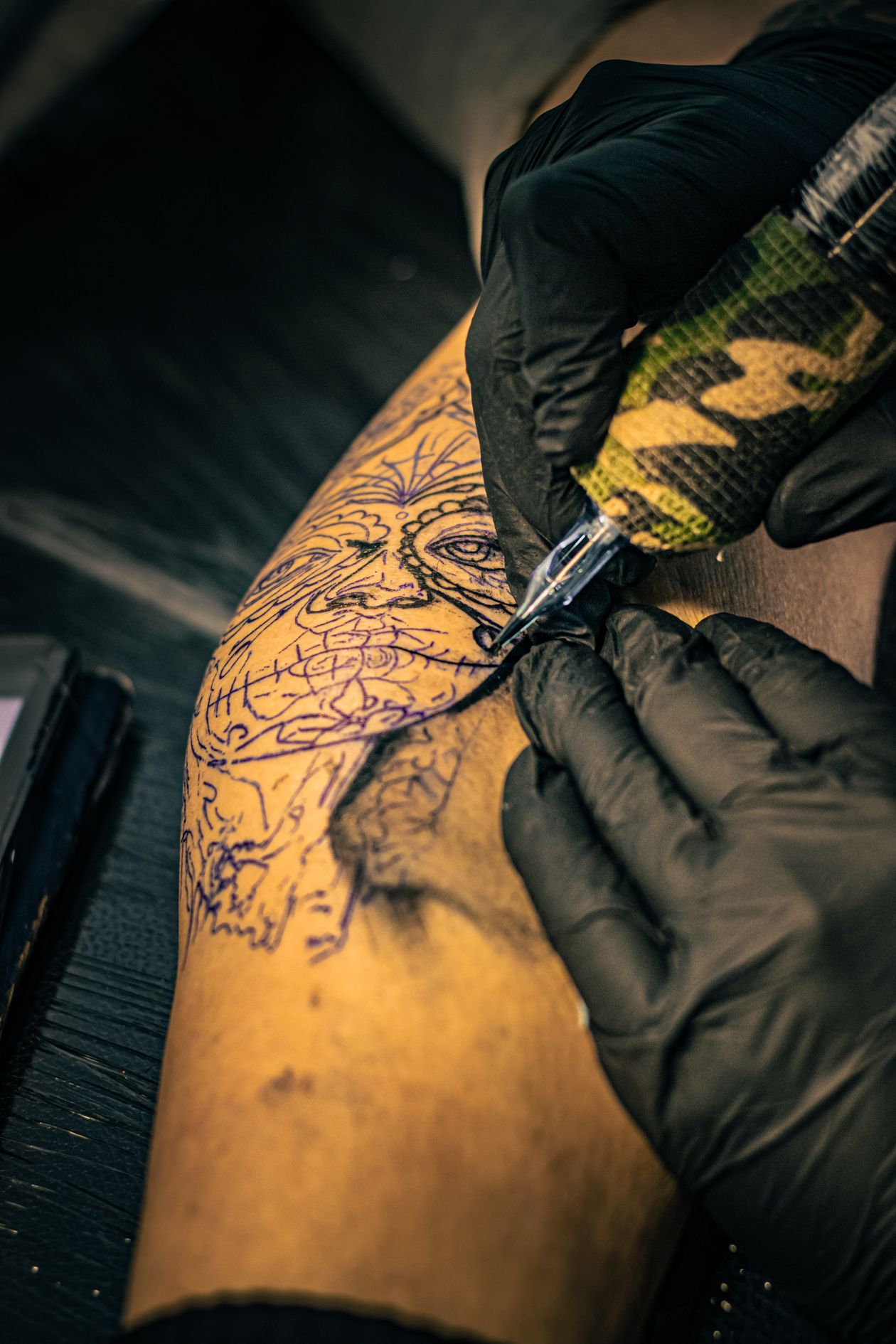
Custom work starts with your idea and a consultation, remote when possible, where the artist translates it into a tattooable design for your specific placement. The drawing is prepared for your appointment, a deposit holds the date and comes off the price, and on the day you approve the stencil on your skin before work begins. Large pieces, cover-ups, portraits, and anything carrying personal meaning belong on this track, because the design time is where those tattoos are actually made.
The trade is time. Custom means days or weeks between idea and tattoo rather than hours, and the drawing process allows only small adjustments at the appointment itself, which is why consultations reward clients who bring references and speak up about what matters. In exchange you get a piece fitted to your body, your other tattoos, and your life, drawn by an artist who has thought about it longer than the session takes.
Choosing your track
Ask three questions. Is this design mine or the artist's? If you found it on a flash wall and love it as-is, that is the walk-in track working as intended. Does it need to fit something specific, a gap in a sleeve, a scar, an existing piece, an exact person's handwriting? That is custom. And how much does today matter? A flash piece can mark a day spontaneously and well. A custom piece marks something by being made deliberately, and most people with both say the two kinds of tattoos feel different to own, in a good way, forever.
Budget and timing follow the same split. Flash is priced as drawn, so you know the cost before you sit down, and the whole thing usually fits inside an hour or two. Custom work is quoted at the consultation once size, detail, and session count are known, and larger pieces spread across multiple sittings spaced by healing. Neither is the expensive option in the abstract; a big custom back piece and a small flash rose are simply different purchases. What matters is matching the track to the tattoo, because a rushed custom idea and an over-engineered flash piece both leave clients wishing they had taken the other road.
Common questions
Can a flash design be changed a little?
Minor tweaks, a color swap or small size change, are usually fine to request. Larger changes turn it into custom work, with the consultation and booking that involves.
Do walk-ins really mean no waiting?
Walk-in means no appointment needed if an artist is free. On busy days, especially Saturdays, appointment clients come first, so calling ahead is always smart.
Can I get a tattoo at 17 with a parent's permission in North Carolina?
No. North Carolina law sets eighteen as the minimum age for tattooing with no parental-consent exception. Piercing rules differ, but tattooing does not.
Photos in this guide are representative stock images.
← All guides from Family Tradition Tattoo← Back to Family Tradition Tattoo