A tattoo is finished twice: once by the artist, and once by you, over the following two to three weeks. Healing is not a passive wait. Skin that has been tattooed is an open wound patterned with ink, and how it is washed, moisturized, and protected decides how much ink stays put, how clean the lines heal, and whether the bright piece in the shop mirror is the piece you keep. Artists can tell at a glance, weeks later, which clients followed instructions.
This guide covers aftercare in the order it happens: the first day, the first week, the itchy second week, and the long-term habits that keep a healed tattoo looking sharp in the Carolina sun. Follow your own artist's instructions where they differ, since they know how your piece was done. These are the standard principles behind nearly every shop's version, including the guidance clients get at Family Tradition Tattoo.
Day one: the wrap and the first wash
The wrap your artist applies protects the fresh tattoo from friction, clothing, and bacteria while the surface is most vulnerable. Leave it on for the period you were told, which varies by wrap type from a few hours to a couple of days for modern adhesive films. When it comes off, wash your hands first, then wash the tattoo with lukewarm water and a mild, fragrance-free soap, using your hand, not a cloth. The tattoo may feel slimy from plasma and excess ink; that is normal and washes away.
Pat dry with a clean paper towel rather than a bath towel, which can harbor bacteria and shed fibers into the wound. Then apply a thin layer of the aftercare moisturizer your artist recommended, thin enough that the skin looks matte, not glazed. More is not better: a suffocated tattoo stays soggy, and soggy skin heals badly. Let it breathe in clean, loose clothing.
- Leave the wrap on for exactly as long as your artist said, then wash hands before touching the tattoo
- Wash gently with lukewarm water and mild, fragrance-free soap; pat dry, never rub
- Apply a thin layer of the moisturizer your artist recommended; shiny and greasy means too much
- Expect flaking and itching in week two; let flakes fall on their own and never scratch or pick
- No soaking: showers yes, baths, pools, and Lake Norman swims no, until fully healed
- Keep it out of direct sun while healing, then use sunscreen for the life of the tattoo
- Wear loose, clean clothing over the piece and sleep on clean sheets
Week one and two: flaking, itching, and discipline
Days three to seven bring tightness and the start of flaking, as the damaged surface sheds. The tattoo will look dull and may peel like a mild sunburn. This stage panics people into over-moisturizing or picking at edges. Both are mistakes. Flakes that are ready fall off in the wash or on their own; flakes pulled early can take ink with them and leave a pale patch that needs a touch-up. Wash once or twice daily, moisturize thinly two or three times, and otherwise leave it alone.
The itching that follows is the healing skin's normal complaint and the test of the whole process. Scratching a healing tattoo can break the surface, invite infection, and scar the line work. Slap it lightly, moisturize it, or put a cold pack over clothing if it is driving you to distraction. Gym caution applies too: shared equipment, sweat-soaked clothing, and friction over a fresh piece are a poor combination for the first week or so.
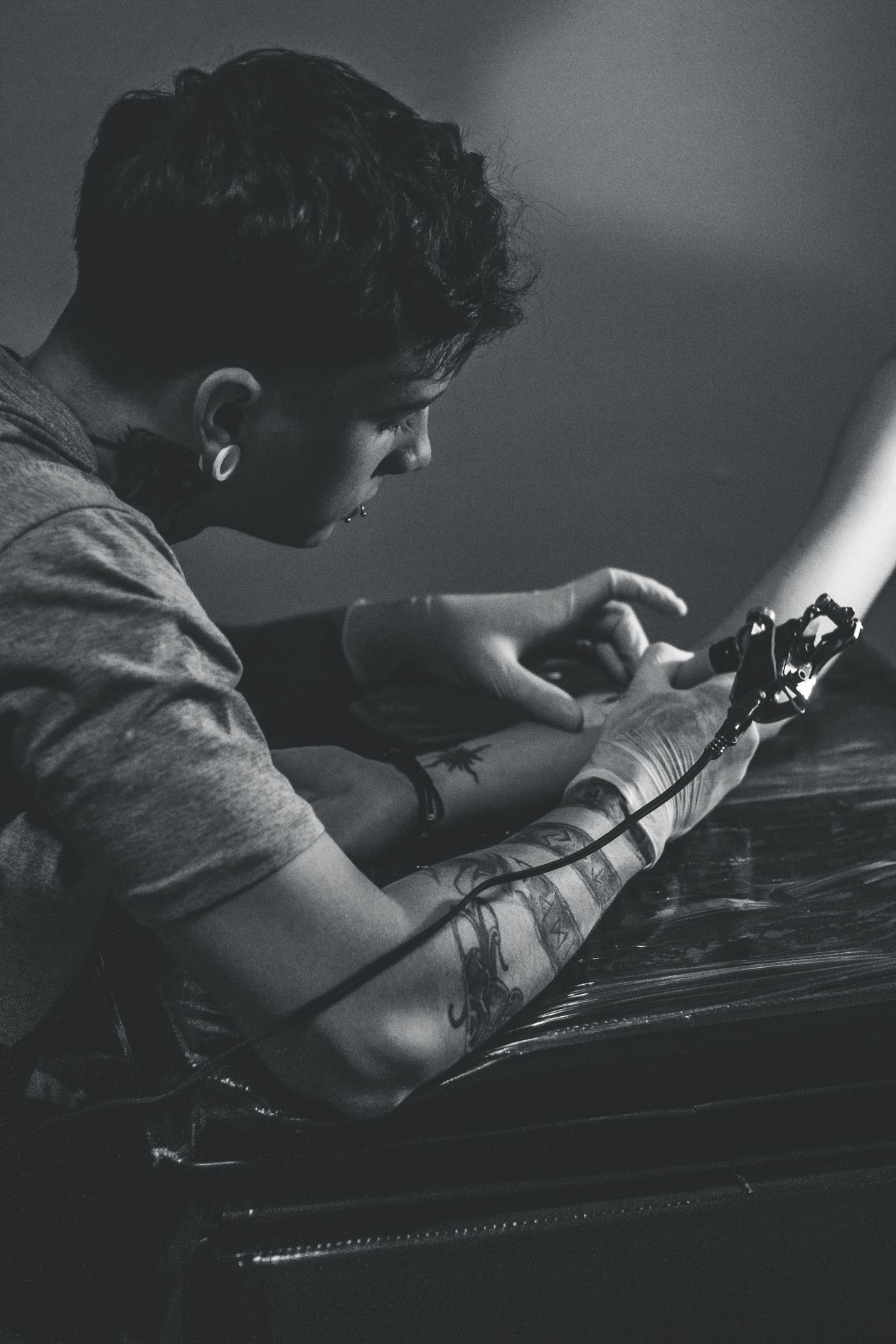
Water and sun: the two hard rules
Showering is fine from the start, with the tattoo washed last and rinsed gently. Soaking is not. Baths, pools, hot tubs, and the lake all submerge healing skin in water full of bacteria, and around Mooresville the Lake Norman swim is the temptation to plan a tattoo around: get the piece in the cooler months, or accept two to three weeks out of the water in summer. This is the rule clients break most and regret most, because infections and ink loss from soaking are both common and avoidable.
Sun is the long-term enemy added to the short-term one. Unhealed skin must stay out of direct sun entirely; it cannot take sunscreen yet, so clothing is the protection. Once healed, sunscreen becomes a lifetime habit for the tattoo. Ultraviolet light breaks down ink pigments over the years, and in the Piedmont, where summer sun is strong from May through September, consistent sunscreen is the difference between a tattoo that stays bold and one that fades to a rumor of itself.
Common questions
How do I know if my tattoo is infected?
Warning signs are increasing redness and pain after the first days, swelling that grows, heat, pus, or red streaks moving away from the piece. Those mean contact the shop and a medical professional promptly, not wait-and-see.
Can I work out with a new tattoo?
Light activity is usually fine once the first days pass. Avoid friction over the piece, shared-equipment contact with the area, and heavy sweating into it during the first week, and shower right after.
My tattoo looks dull and milky at week two. Is it ruined?
Almost certainly not. Healing skin grows a fresh layer over the ink that looks cloudy while it matures. Judge the piece after three to four weeks, when that layer clears.
Photos in this guide are representative stock images.
← All guides from Family Tradition Tattoo← Back to Family Tradition Tattoo